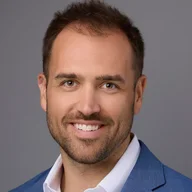
Nick Fischer (00:02.006)
All right, chiropractors, welcome back to another episode. I’m super excited. Today we’ve got Dr. George Birnbach here from Five Star Management. He has got years of experience and running practices and coaching and all these great things to help practices like you thrive. Dr. George, thanks for joining us today.
George Birnbach (00:20.954)
Absolutely, my pleasure. Thanks for having me. I appreciate it. I love the work you do.
Nick Fischer (00:25.685)
Yes, I have yours too. The stuff that you guys do at Five Star is amazing. Can maybe you can kind of introduce yourself a little bit and tell people about your background and what you’re doing and then we can dive into some of the nitty-gritty stuff. Does that sound okay?
George Birnbach (00:39.854)
Yeah, that sounds fantastic. So I’ve been a chiropractor since 1998, got my license on April Fool’s Day, 1998. We opened our first practice with 40 new patients, which was fun. And six months later, we had the largest practice in that area. Now, back then, we were told by the Don Harrisons of the world and the Chuck Gibsons of the world and the Jay Morgans of the world that we were supposed to see 100 people a day.
George Birnbach (01:05.914)
And so that’s what we did six months after opening, we were seeing about 550 people a week. And some people hear those numbers and they go, well, that’s not how I want to practice. Well, that’s fine. It changes over the years. What we did in 1998, 1999, 2000, isn’t the same practice that people have in 2024, 2025, 2026. But the model of how we grew that practice is something people started asking me about almost from the get-go.
George Birnbach (01:34.816)
And that model was you take care of the person in front of you and you future pace why you have something for them that’s relevant for them and their future moving forward. And then your retention goes up, your new patient marketing stress goes down. And we had so much fun in that practice. We thought we would duplicate it. So we opened our second practice 700 miles away and we opened a third practice 300 miles away from that one.
George Birnbach (02:03.406)
which made commuting fun. And next thing I know, I had associates and practices up and down the East coast. Yeah.
Nick Fischer (02:09.652)
incredible. So multi locations, you saw the success, you know, kind of duplicated in all these different locations. You started connecting and that’s kind of how you got involved in five star. And now you’ve been coaching for, for how many years did you say?
George Birnbach (02:22.338)
I’ve been coaching practices for 25 years. I’ve been working with five star management for 18, 19, maybe 20, 2006, 2007, something like that. But the big thing that we learned in this process is that the ego wanted multiple practices, but the systems and the pocketbook wants one practice, multiple doctors, one building, you plus two doctors in bonus in a profitable.
George Birnbach (02:51.546)
associateship in the same building will out, it’ll outpace any multiple clinic scenario because your production goes up and your stress goes down and it’s a much better way. But for me, I had to go through that process before I learned that lesson. And I learned that lesson by getting involved with Five Star back in 2001, I think. Yeah, way back when.
Nick Fischer (03:14.878)
Yeah, so kind of consolidating the, you know, growth within one building kind of kept your operating costs lower, your efficiency higher, and it helped you, you know, be more successful with those.
George Birnbach (03:26.41)
Right. So I was coaching this wonderful doctor and there were three practices. They had one doctor in this practice. Good practice. One doctor in that practice. Good practice. Two doctors over here. Good practice. But then two of these doctors decided to leave. So what happens? Well, now you have two empty buildings. So you have three overheads, two producers. The way we do it now, we learned these lessons. Well, we do it now the way our top doctors in five-star do it.
George Birnbach (03:54.656)
is multiple doctors in one building. And then if you really have a practice worthy of duplication and you feel called to open a second practice, we do a U plus two model, bring another doctor in, launch them into their own practice, do a U plus two model there. There’s a better progression now than just because you can afford another building, you go and get it. You see? So increased production, decrease overhead with every new associate that gets developed. And in the new model that we run,
George Birnbach (04:23.278)
which is a win-win associate model, we’re really training the skills that an associate needs for their future. Even though you as the practice owner today is benefiting, we’re thinking about what skills do they need to eventually do what we’re doing, associate development, U plus two in one building. And that way the associates, and this is quite honestly one of the things that we’re most proud of. We have associates.
George Birnbach (04:51.406)
who eventually buy the practice that they’re in and then come back and join five star as a client so they can duplicate a win-win model for their associates because it was such a positive experience. And if you grab 10 chiropractic associates off the street and ask them about their associates, seven out of 10 are going to tell you it was difficult or negative. We don’t get that in the win-win model. So yeah, my history was multiple practices up and down the East coast, except once you learn that lesson,
George Birnbach (05:21.412)
We had a U plus two model in every one of those clinics, infinitely stable. It’s the most stable practice you’ll ever run. It’s great.
Nick Fischer (05:29.867)
Yeah,
Nick Fischer (05:30.087)
that’s pretty amazing. And I’ve read some of the material you guys do. I’ve obviously been to some of your seminars and learned some more about that win-win system. And it’s pretty incredible what it can do for a practice, especially for those doctors that are looking a little bit more financial freedom, a little bit more time freedom. So they’re not so hands on with every single component of the practice. So that’s amazing stuff. I think one of the big questions is, how do you get your practice to like…
Nick Fischer (05:59.102)
that level where you’re ready for an associate. Obviously, like, practices are always chasing new patients and trying to do marketing and all this type of stuff. So, you know, out of your years of experience and running your practice and coaching, where are you seeing, like, your practices thrive when it comes to the marketing? When they say, hey, we want to do more marketing to get new ones, what are you hearing there? What’s kind of like your advice to those practices?
George Birnbach (06:25.238)
I love this question because for years, for decades, the number one reason people call us is, hey, I need more new patients. new patients can’t cure everything in a practice, but they can solve a lot of problems if you throw enough new patients out of out of practice. The problem is if everyone walks in the front door and you get really excited, but they just kind of wave to you as they leave through the back door or worse, the side door, like they break in the middle of a care program, it’s maddening.
George Birnbach (06:54.104)
So the way we look at it is that there are levels to a practice. The very first level is called revenue stability. You have to make more than you spend, right, in order to stay in practice. So in the first level, we teach you the skills. Now, people think, there too many chiropractors in my town. I was in Charleston, South Carolina. There were 78 chiropractors within three miles of my office. We still grew an enormous practice there.
George Birnbach (07:22.328)
had multiple associates, it was fantastic. But when we’re looking at growing, it’s not that there are too many people around, it’s that you don’t have the skills to compete. So let’s say I asked you to go play basketball against LeBron James, you might be really good at basketball, I don’t know. I’m not. If I had to go compete against LeBron James, I would be a bit afraid of that matchup, right? But if I had the skills to compete,
George Birnbach (07:51.372)
It’s no longer frightening. It’s fun. It might, I might lose, but I’m not afraid of the challenge of it. So now how do we grow a practice? Well, people go, I got to hire an agency. Okay. Agencies are great. Some of them they would do good work. Hey, we got to run an ad. Okay, great. But do you know how to run an ad?
George Birnbach (08:12.814)
That’s the skill set, right? Do you know how to make an offer to help somebody is more important than memorizing a 34 page report of findings? We took a 34 page report of findings and you know, I if this is you I apologize if you’re out there in the in the wonderful worldwide web But if you’re using a 34 page report of findings Just consider why? usually it’s because you didn’t get a rapport bond during the history the
George Birnbach (08:41.102)
Patient is making a decision at the history level not at the report of findings level Right report of findings or logistics how we’re gonna work together Not if we’re gonna work together the bond is built on the history in the exam. So go back one step further How do you get new people in the building? well, you have to get a rapport bond on a frustration that someone wants to solve and Then make an offer to help so the very first skill we teach young associates
George Birnbach (09:10.178)
is not how to memorize a report of findings or how to do a history. It’s how to make an offer to help someone. It sounds just like this. Hey, what about your health would you like to see improved? Well, I’ve got these headaches. I’m so sorry. Here’s a transformation statement. First thing they ever memorize. Hey, we help people with headaches, get rid of their headaches by fixing their posture so that you can get back onto the life you want to live. If you’d like some help, I’d love to help. Would you like to help?
George Birnbach (09:39.746)
That’s the first phrase we teach any associate in the associate empowerment program. The reason is you can, you can pay 10 grand to go to an event. You can stand there with a big Sam machine or a big fancy laser. And if you can’t make an offer to help somebody, what does it matter? So if we look at a practice, the very first thing I’ll teach an owning doctor is draw out the money line and they all go, what do you mean?
George Birnbach (10:09.326)
Here’s the money line. And if you don’t have this, you don’t know what I’m talking about in your practice. If you’re listening to this, write this out. Stranger to a marketing event that gets their attention on a frustration, the offer to help them solve that frustration. Then it’s the most profitable thing in your entire clinic, your front desk telephone. Every dollar you spend on marketing goes to that telephone. Every ad you run goes to that telephone.
George Birnbach (10:38.348)
Your telephone has to be rock solid, systematized and perfect. So stranger to marketing event to offer to the front desk telephone that converts interest to appointment. Then we have show rate. Then we have history, exam, report of findings, conversion onto a care plan, consistency through a care plan where you get good results, never cheat your technique and do results first.
George Birnbach (11:07.938)
And then retained patient through a care plan, five-star review and referral. That’s the money line. Well, what about this laser, that laser? It either fits on this line or it doesn’t. This is the difference between someone who doesn’t know you and a profitable clinic. Just draw that out. Grab three markers, red light, yellow light, and green light. Is it working? Is it not working? Or is it frustrating and forced?
George Birnbach (11:35.116)
You have a practice running by the end of that half hour. You know exactly where you need to focus, exactly where you need to fix. Everyone worries about how do I just drag someone into the building? But if your landing zones, your money line isn’t smooth, if there’s any friction, distraction will kill a transaction faster than anything. So friction will destroy the flow of new patient generation out here. So
George Birnbach (12:04.14)
Let me go back to the original question. How do you get people? Well, most people join a B and I group, right? And they do it wrong. Joining a B and I group. That’s perfect. Asking their B and I group, your referral group, your tip group for referrals is where you go wrong. You don’t use it that way. If you’ve ever joined a business group, they’ll send you three or four people this year. And then they dry up and everyone goes, I sent you everyone I know. Don’t use it that way.
George Birnbach (12:30.618)
What we do is I walk straight up to Nick Fisher, who’s in my BNI group, and I say, Nick, what do you need to get out of this group so it benefits Chiro Basics in you? And you’ll tell me. And I’ll say, great, I’m going to try to do that for you. Would it be OK if I told you what I need to get out of the group? And being a polite human being? Yeah. And I say, what I’m asking for is that we can come into where you work, whether there’s two people or 22 people or 202 people.
George Birnbach (12:58.072)
We’d like to come and do one 20 minute talk once a year. Would you be okay with us doing that? And if you have 1300 people in your chamber of commerce group and 10 % of them say yes, you have two talks a week for a year. You ever gonna run out of new patients? Never gonna run out of new patients. You see, new patients aren’t ever the problem.
George Birnbach (13:24.236)
It’s your ability to put yourself in front of someone where you make an offer to help them. You see, and that’s, that’s the way we build these practices. Now, you know, this even better than I do. There are two types of marketing still in the world. used to be external and internal. They still exist, but now we have online and offline and in online we have paid and not paid in offline. have paid and not paid. Right.
George Birnbach (13:53.72)
So the world of marketing is dramatically different over the last five, 10 years. It’s going to be dramatically different over the next five or 10 years. Look what we’re doing with technology now and automating these avatars and all of this. But the fear that most people have is not that there aren’t enough chiropractic new patients is that they’ve never developed the skill sets they need to be relevant to that person.
George Birnbach (14:21.912)
because there are only nine buying triggers in a sale. And no one really teaches this, but I’ll tell you right now, there are three. One is relevance, second is buy-in, and third is retention. And the relevance triad is why are we talking about this at all? Why now and why you, right? If you don’t get that across to someone,
George Birnbach (14:48.466)
There’s no reason for them to be in a conversation with you. So why are we talking about headaches? Why are we talking about it now? And why should I be talking to you about it? If you get those three right, you have their attention. Then it naturally shifts the buy-in. And this is what’s going on in the buyer’s brain. Am I safe? Does this person understand what I need? And can I trust that they’re going to get me what I want? That’s the buy-in triad. That’s where the sale happens. If you want to use the word sale.
George Birnbach (15:16.654)
That’s where the decision happens, right at number six. And then once they say, yes, I want to do it, now all you have to do is screw it up or not screw it up. Right? And the bottom three, the retention triad is what are we doing? Why are we doing it? And am I making progress through the process? And so people ask me all the time, Dr. Birnbach, need, I just need help with my report of findings. No, you don’t.
George Birnbach (15:46.37)
Because if someone came into your office on day one, they wanted help. If they called your office, made an appointment, got off their couch, drove to you in a car that costs more than your care plan, they can afford help and they want help. The only reason they said no is you talked them out of it. So you probably need to talk less, not more. And you don’t need a fancy or report of findings. You need a better history because they don’t see the reason for you in their future.
George Birnbach (16:15.544)
That’s why they say no. I’ve taught people to sell $6,000 care plans, $14,000 care plans. It has nothing to do with the sale. It has to do with, does this person see you as someone who can get them what they want? Yeah, but money’s hard this year. Money’s hard every year. It’s all relative. But they drove to your office. They can afford you, right? This is not a money problem.
George Birnbach (16:44.172)
Money is just the easy objection. Time is an easy objection. I’m too busy right now. I’ll do it later. They’re just saying, I don’t trust that you can actually pull this off. And that’s a history problem. That’s an offer problem. That’s a rapport problem
George Birnbach (17:00.046)
Yeah.
Nick Fischer (17:00.109)
Yeah,
Nick Fischer (17:00.749)
that’s super powerful stuff. I think that there’s a couple of things that stuck out to me. And the first is really about the way that you position the offer. So the language that you use, I love because it aligns so much about what we talk about, which is making it relevant. The fact is, is that most patients don’t understand chiropractic care. Most people have never seen a chiropractor to begin with. So
George Birnbach (17:20.6)
Right.
Nick Fischer (17:28.969)
using language that aligns what you offer with their real world experience. Hey, you’re dealing with these headaches. That’s what we do. This is our specialty. This is why people come here. It really makes you relevant to their life so they can make the connection that this is the right place to be to feel better and live my best life. So I loved that. The second thing that I loved was the rapport component, which is using
Nick Fischer (17:57.601)
authority and natural language to build that relationship with those patients. You know, if you have a strong relationship with people, they’re less likely to quit. They’re more likely to trust you, to sign up for care, to stick through it. Even if they don’t get the results immediately, they believe you, they trust you, they’re gonna work with you to make that happen. And there’s so much value in that rapport building. And you kind of mentioned it, now there’s all these channels for marketing, right? You have traditionally of online, et cetera, et cetera.
Nick Fischer (18:27.118)
but all of it boils down to in creating a rapport with that patient. Sometimes it’s in person, sometimes it’s they see your logo on the t-shirt, sometimes it’s the video they watch on your Facebook or whatever. All of those touch points create that rapport. Can you speak a little bit more about that rapport component? Like what does that actually look like in the office day one, day two with a new patient? How do you establish that rapport so they trust you and see you as this authority figure?
Nick Fischer (18:56.808)
How are you handling that in the office?
George Birnbach (19:00.118)
Absolutely. And it’s one of my favorite things to do because it’s something that moves the needle immediately. When I taught, I’m going to show you this skill. When I taught this one skill and you’re going to hear this and you’re going to go, can’t be that easy. And we put this skill into one clinic in San Jose, California. He grew $400,000 in his first year. Right? It’s not magic. It’s one sentence. Okay.
George Birnbach (19:32.388)
Think back to every medical office you’ve ever gone into in your life. Any urgent care place you’ve ever been in, any chiropractic office, any dental office. Hey, so tell me what’s going on. That’s the first question these people ask you, right? Hey, tell me what brought you in, right? And what goes through your mind as a buyer, as a consumer, as a patient? well, let me tell you. Now, didn’t you just fill out all that paperwork in the lobby?
George Birnbach (19:57.508)
Didn’t you just sit with the nurse and get your vitals taken? Now this guy’s coming in like he you’re a brand new guy to him. And the only thing that goes through your gut is it’s a little defeating like, I got to do this again. That tediousness is an annoyance. We don’t start with an annoyance in the practice. So we do a few things, but one in particular. If we look at the way someone comes into the office, all the normal stuff happens.
George Birnbach (20:27.108)
Hi, you must be Nick, our new patient at eight o’clock. Welcome to the clinic. We never say hi, by the way. We always say welcome and welcome to the clinic. So nice to meet you today. Come on over here. Let me tell you what we’re going to do today. And then we’re going to frame out your day. That’s not even the important piece. That’s just a normal piece. Then we put you into a treatment room. You’re sitting in a history room waiting for the doctor. But we sit you there and we say, hey, Nick, I’m going to go get Dr. Birnbach. You don’t love Dr. Birnbach. Everybody does. That’s a primacy statement. Normal.
George Birnbach (20:57.046)
It should happen easily every day. Now the doctor walks in. Here’s the big sentence. Hey Nick, I understand that every time you get in and out of a car, your low back lights up and you got to hold on to something. Do I have that right? Yeah. What do you say we fix that? That can’t be any fun. That’s the sentence. I don’t allow one of our associate doctors to walk into a history room if they don’t have the chief complaint memorized. Cause why did this person come to you to get the opposite of a frustration?
George Birnbach (21:26.892)
Now I’m a chiropractors chiropractor love chiropractic talk about it all day long coach chiropractors each and every day. I love optimal health. I love subluxation removal. I love all of these things. But if someone walks in with a swollen ankle, they don’t want optimal health. They want the opposite of a swollen ankle. Hey, I understand your ankles all swollen. What do you say we work on that? Get rid of that for you. Great. All the other education happens afterwards.
George Birnbach (21:56.314)
But that initial rapport bond, every patient is the star of their own life. They’re star of their own show, right? So they’re coming in saying, my left ear turns blue. Hey, I understand that every time you get a headache, your left ear turns blue. What do you say we work on that? What do you say we solve that for you? Perfect. Yeah, let’s do that. Now, before we get started, let me tell you how we do things here. And we can go into a pre-consultation statement after that. But that initial sentence,
George Birnbach (22:25.742)
Has that person feeling I am in the right place finally? And that’s why our conversions were 98 for six years in a row, right? It didn’t matter the price point a $3,000 biophysics program a $7,000 decompression program, you know, we all start off with two people I’m the puzzle solver. You’re the puzzle. I’m gonna let you know that I heard you when you filled out that paperwork
George Birnbach (22:54.766)
You didn’t have to tell me a second time. That’s built on something called the friendship formula, which was a study done in New York City by the police department, believe it or not, on how do you develop a relationship with someone. And you can either spend a lot of time with someone, hey, let’s hang out every day for three months, or we have to spend a lot of time, hey, let’s go to lunch, spend an hour and a half. The fracture of that friendship formula is intensity.
George Birnbach (23:20.814)
And what’s the fastest way to provide someone intensity that’s nonviolent is give them attention. So we walk in, make two seconds of eye contact, not 22, 22 freaks people out, right? But we give two seconds of eye contact and then we tell them that we understand why they’re here and we want to help. And that’s where we start the whole process. It starts off everything in the right model. And then after that,
George Birnbach (23:50.348)
If you want not a second bag of tricks, but like a little utility skill to have on your belt at all times, four little letters, W H W W what’s going on specifically? How long has that been going on? Got it. Now, what have you tried so far to fix this? I’m going to empower him or her to believe that, listen, you’re a smart person. You should have been able to figure this out potentially. Right. We’re in this together.
George Birnbach (24:20.25)
So tell me what have you tried already? And they’re going to exhaust a list. I tried Advil, I tried stretching, I tried yoga, I tried shockwave, did another chiropractic visit, went to a physical therapist, whatever it is, and what else, and what else, and what else. And when they get done, I’m going to go, huh, a lot of that, that helps people. All of those things are reasonable. Why do you think that didn’t work? And they’re going to give me the perfect answer.
George Birnbach (24:46.136)
And they’re going to say, I don’t know. Now they might be thinking, I don’t know, dummy. That’s why I’m here. But they’re going to say, I don’t know. When you get an, don’t know, that is our pivot where we go, that’s all right. We’re going to figure it out. So let me show you what we’re going to do. That is where you go from a peer level conversation to a leadership level conversation where now I’m taking you into the future and you’re following my leadership rapport before leadership.
George Birnbach (25:15.362)
is what you just heard through that whole sequence. So we walk in, we know their chief complaint. I understand that you’re going through this. Do I have that right? We validate it. Do I have that right? Great. Well, that can’t be any fun. What do say we fix that? I mean, as long as you’re here, we might as well fix you. So can I show you how we’re going to do that? Perfect. You see now let’s get into specifics. What’s going on? How long? What have you tried so far? Huh? That’s reasonable. Why do you think that didn’t fix this for you? I don’t know. Got it.
George Birnbach (25:44.686)
Well, let me show you what we’re going to do. And now we’re in a leadership conversation. Once you do that and the whole process takes two minutes, three minutes, it’s a totally different relationship.
Nick Fischer (25:57.022)
Yeah, now they’re seeing you as this authority figure, right? I loved how you transition that into the leadership position because now they’re following you. You’re taking them along this journey and you can start doing the education component and start building that rapport even more as you show the expertise and why chiropractic care is so powerful. So that all sounds great. You know, for the doctors that feel their day one, day two,
George Birnbach (26:00.932)
Friendly authority, yeah.
Nick Fischer (26:24.519)
aligns with that or they kind of start dialing that in and they want to start really getting to that next level. What are some of the bottlenecks for that next step? Like where are you seeing the leakage? Where are people kind of dropping off? They’re not signing up, they’re not finishing the plans, they’re not sticking around for wellness afterwards. Like where are some of the bottlenecks in that, like getting to that next stage, that next step of growth?
George Birnbach (26:47.086)
Yeah. So there are a few things and what I would suggest is you start with a friction and flow study. A friction and flow study is starting with that money line from stranger all the way through referral, retention, retained patient, and a five-star review. And then figure out what feels hard. That’s the right question, by the way. What here feels difficult? And what feels difficult is a skill set missing.
George Birnbach (27:16.802)
So the program, when we’re planning anything, let’s say we’re doing a game plan, going back to our basketball analogy, we want a game plan to beat the LA Lakers, whatever. We’re gonna go, here’s our strategy, here are the systems, great, that’s our playbook, and then here are the skills we need to operate that. But once the game starts, we go the opposite direction. We run these skills against these systems to achieve that strategy.
George Birnbach (27:46.414)
So it’s kind of like an uphill downhill flow. When we’re looking at bottlenecks, if we look at constraint theory, we have to start with this friction model. What feels hard? Well, you know, my staffing feels hard because I’m hiring adults, but they’re not doing their job. Great. Perfect. Clarity before accountability, followed by consistency. Clarity, accountability, consistency.
George Birnbach (28:13.902)
The way most people screw this up is they put accountability before clarity. So if you say this feels hard, I don’t care whether it’s new patient generation, managing staff, retention, wellness programs, is it written out? Do you have it written and clear exactly what you want it to be? Once we know what we want, then and only then can we build systems to get it. And then and only then can we figure out the skills we need in order to do it. So the number one constraint is you’re missing a skill.
George Birnbach (28:43.268)
But the skill is hard to identify unless you have a clear written vision for what I want. And I’m not talking a metaphorical vision, right? I’m not talking about something like, you know, hazy. I’m talking about the answer to the spice girls question, right? Tell me what you want, what you really, really want, right? I want that question answered. Like I want this kind of a wellness practice. Great. Tell me in more specifics. Tell me exactly what you want. Great. What are the systems that get us there?
George Birnbach (29:13.262)
Great, what are the skills you need in order to run those systems? If you do that, constraints kind of go away. The biggest problem with constraints or bottlenecks is people try to do the fancy fix or the expensive fix, and almost always it’s the cheapest fix. And the cheapest fix is make an offer. I don’t have any new patients, make more offers to help. Yeah, but who do I talk to? Anyone you don’t know who has any frustration that you can help?
George Birnbach (29:42.552)
you have to make that offer to them. Yeah, but I’ve already been in this BNI group for six months and it’s not playing out. Great. Go get talks from your BNI group instead of wait for people to bring you patients. Go ask people, Hey, this is what we do at the clinic. We help people with low back pain, get rid of their low back pain by removing subluxations so that they can pick up their kids without pain. If you’d like to help, I’d love to help. Always fall back to that offer. If you have trouble,
George Birnbach (30:11.276)
with a staff member. One of the smartest things a friend of mine said to me was when you’re spending more time talking about a staff member than you want to talk to them, it’s time for a change in your management style or their employment stat. Right. And that these things are almost always personal actions. So you want to fix a constraint, you want to fix a bottleneck, draw out your money line, grab your red, yellow and green highlighter. What feels hard?
George Birnbach (30:41.048)
Because if you fix the money line, the profits there, right? Once the profits there, you have the ability to make different decisions. If you don’t have the profit there, you’re always wondering how we’re going to be able to afford making a decision. You see? And whenever you’re faced with a bottleneck, what’s the skill that’s missing? If I had one skill or one system that fixes this, what would that be? How do I get that? And if you’re not sure which one to buy, call people like Nick Fisher.
George Birnbach (31:08.964)
call people like George Birnbach and say, this is the problem I’m facing. Do you know five people who fixed it? And I’ll say, sure, let me show you what they did. Don’t try to be the smartest guy in the room. I’m lucky where I’m never the smartest guy in the room, but I love being surrounded by people with perspective. And that’s what being in a management group, not a five-star necessarily or a singer or a winner’s edge or any of them, right? It’s just surround yourself with people who get perspective.
George Birnbach (31:38.116)
from solving problems and you’ll never get stuck behind a problem again. The mastermind group is without a doubt the best modern day coaching experience. You know, you get to talk to people like Brian Morris, seven associates developing from none in just 10 years. He grew 700%. Milo Thurber’s associates are bringing in three quarters of a million dollars a year, right? These aren’t magic things.
George Birnbach (32:04.898)
It’s just that whenever they’re coming up against a problem, there’s someone in the group who said, Hey, I know what you’re about to run into. Let me show you how I fixed it. And that’s what I love about working with you and Cairo basics is that you can say, I know what you want to build. These are the five guys who are producing the best new patients from their website. Let me show you what they did. And that’s more important than some guru saying, I know what you need. And if you pay me enough, I’ll tell you.
George Birnbach (32:32.61)
No, it’s all group think, it’s all perspective. And you want the you want the people running your management group to be open to the ideas of the group that collective intelligence, because that’s what really takes the group to a brand new level. You know, we’re teaching a seminar coming up and we have seven speakers who are all running million or multimillion dollar practices who are sharing freely to everyone else in the group. And you just don’t find that in the old guru.
George Birnbach (33:02.49)
You know, you need that group thing to make this more fun.
Nick Fischer (33:07.384)
Yeah, I totally agree. You know, I’m involved in different groups and in the chiropractic space and just like in the marketing space. And it’s amazing what happens when all these great minds get together and everybody just elevates together. You get to learn off of other people’s mistakes and you get to learn the best practices that are working across the country. So I can’t recommend that enough, especially the five star group. I’ve been to your guys’ stuff and it’s pretty incredible to hear like people’s stories and
George Birnbach (33:20.634)
Yeah.
Nick Fischer (33:34.094)
learn the systems you guys are using with that win-win associate model. It’s pretty incredible. If there was someone out there listening that did want to learn more about you as a coach or the five-star system or wanted to get more involved in some of the things that you guys are doing, what’s the best resource for them? Where should they go? What can they do to start absorbing that content?
George Birnbach (33:56.718)
You know, the absolute best way to reach us is just go to my five star dot com, spell out Y F I V E S T A R dot com and just set up a, start a conversation with me, start a conversation with Dr. Lloyd. The first question I’m ever going to ask anyone I get on the phone with, cause I’m actually super excited about it is tell me what you’re trying to build. Tell me where you feel stuck. Tell me what you want instead.
George Birnbach (34:25.474)
Right? Because those things give me all the ammunition I need to create a plan. And whether you work with me or you don’t, you just take the plan and run with it. That’s fine with me too, because at some point you’re going to realize that it’s more fun to do it together than it is to do it alone. And even though you’re in a whole profession with thousands of chiropractors, you can feel pretty isolating inside one practice. So if people reach out to me through my five star.com or
George Birnbach (34:53.208)
You know find me online george bernbach on instagram or whatever just shoot me a note and start the conversation There’s no pressure to talk. I love helping people solve problems and if I can help you i’ll help you and if I can’t Well, you know, maybe there’s someone in the group who who’s better at it, right? And so we’ll just leverage the whole collective of the five-star mind model And help you go up that scale. But if you ever want to get rid of the golden handcuffs if you’re a successful doctor
George Birnbach (35:20.312)
The best way to do it is with a win-win associate model, you plus two successful associates in one building, you remove those golden handcuffs, you start seeing yourself with six, eight, 12 weeks of vacation, and you start making the best money in chiropractic, but more important than any of that, you’re actually making the profession better by launching successful doctors out of your mothership clinic. And it’s the best model I’ve ever seen inside of this profession. And I love being part of it.
Nick Fischer (35:49.762)
Yeah, that’s pretty incredible. As you were talking, I was remembering I recently took my kids to go see the new Mufasa movie, which is like the live action next phase of the Lion King series. And I know this is super like out of left field, but there was a phrase that Rafiki said and there was like a whole song about it where you want to go fast, go alone. But if you want to go far, you got to go together. And I think that’s kind of what the five star mentality is around.
George Birnbach (35:59.96)
Yeah.
Nick Fischer (36:19.962)
So excellent group, amazing gold information here today. Dr. George I thank you so much for all you listening. I’m going to throw the links to the five star stuff in the description area. They’ve got books, they’ve got webinars and they’ve got all sorts of videos and material that you can go absorb and seeing if their coaching and win-win associate system sounds interesting to you. I highly suggest you go check it out.
Nick Fischer (36:46.883)
I’ve seen it firsthand and it’s pretty incredible stuff. So I’ll put the links down there. Dr. George, thank you so much for joining us and sharing all of your wealth of knowledge. This has been super powerful for everybody.
George Birnbach (36:58.788)
Well,
George Birnbach (36:59.16)
thank you. appreciate it. I appreciate the time out of your day too. Thank you.
Nick Fischer (37:03.278)
Good deal. Well, chiropractors, we will see you next time. Thanks for joining.