00:00 All right. Welcome chiropractors. Thanks for coming back. I'm really excited about today's episode. Today we've got Dr. Noel Lloyd here from Five Star Management. Excellent group, consulting group that works with practices across the country and I'm super excited. Thanks for joining us today. Hey, I'm thrilled to be here. I hope you're speaking to me. Yeah, absolutely. Yeah, I've been looking through a lot of your guys's content
00:29 and learning more about your guys's group and you guys are doing some awesome stuff in the space. But before we dive into some of that stuff, I'd love to, you know, just hear a little bit about your backstory, learn about you. How did you become a chiropractor? What got you into this space and tell us your story. Well, I was born in a little mill town north of Seattle called Everett, Washington, and we were having a family
00:51 picnic at Legion Memorial Park. And I was hanging by my knees from the monkey bars and I yelled, look dad. And I was about four or five years old and kids do stupid things and I just let go. And I went straight down on top of my head like a dart and knocked myself out. My dad thought I was dead and I wasn't. And so I ended up at the hospital. They checked me out because I was acting goofy and I did get a concussion and the
01:21 doctor said I would be fine. They were going to have to watch me. But I got sick. And I stayed sick for about a year. In the family album, there are pictures of me at family events. I'm on a blanket on the couch, sick. I'm at the park on a blanket, sick. And finally, a woman cornered my mother. You got to remember that this is about 1955, 54, 55. And not a lot was known about chiropractic. And she says, you got to take Noel to a chiropractor.
02:00 So my parents decided that they would do that. And I got my first chiropractic adjustment. And it was one of those miracle deals. I screamed like crazy. I didn't like the process. My mom reminds me. But by the time we got home, I was a different kid again. So when I was 11 and coming home, this is years later from a chiropractic visit, my dad said that I wasn't too young to think about what I would like to do for a living.
02:37 I remember thinking this, I am too, I'm 11. And so my dad who never gave advice said, you know, you could be a chiropractor and you could help people. And by that time, Everybody in my immediate family and my extended family had started up chiropractic care because of what chiropractic had done for Noel. So I decided to become a chiropractor. And I actually enrolled in Palmer Chiropractic College when I was 18. That was before you had
03:08 to have an undergrad degree. And I was practicing when I was 22 years old. So that's how I got into chiropractic. Wow, that's amazing. Thank goodness you were okay from that fall. That sounds pretty traumatic, especially if it was a big kid and I had a big head and I had a big fall. I hear a lot of stories from chiropractors and how they got in the space and there seems to be a common pattern where there was some type
03:34 of medical issue and then chiropractic really saved them and turned their life around. So that inspired you to get into the space as well. Tell us a little bit about your chiropractic career. You've been leading the Five Star Management team for a while now. Tell us about that transition. What got you from running your practice into the management space? What did that all look like for you? Well, I got up to a particular
04:04 level in practice and then I heard about practice management consultants and I had no idea that there was such a thing or what they did. And I ended up at Parker seminars and Gibson seminars. And all of a sudden I went from 100 to 200, from 200 to 300. And I grew this wonderful, amazing practice. And I started teaching. I started teaching at Parker and different places. And I just absolutely loved it. And so I decided that I would do my
04:38 own program. the term Five Star Management. And I think that people probably came to me nine times out of 10 or maybe 19 times out of 20 because they needed new patients. And I was really, really good at producing new patients. I opened up a clinic in Everett, Washington. The first month open, 161 new patients. I mean, we were just flooded with new patients. And so I started helping people and I got lots of different clients, but
05:17 after you get a whole bunch of new patients, you need help. And so the transition, the transition at Five Star is that we started to not only help people with new patients, but help people hiring chiropractors and developing chiropractors in what was called the win -win model. Now, I had this big fat practice, 500 plus patient visits a week and I got in another accident. There seems to be a theme here and I almost wrung my neck.
05:53 I was in Sun Valley, Idaho and I had this terrible accident and I started to experience loss of strength in my right arm and pain in my right arm. And so I literally had to quit practicing. So I had to work on my own practice and bring associates in. And what I learned over a period of about four or five years was what I today call the win -win associate model. And what I was able to do is I was able to take one practice
06:29 and 500 patient visits a week into five practices and 2 ,000 patient visits a week. And I had these great relationships with my associates. And it was because of what, as I mentioned, later became the win -win associate model. And that's what I help chiropractors with today. Now, Tuesday of this week, which was just yesterday, I was on a Zoom and there was, I think, three... Three dozen thirty six thirty thirty eight doctors
07:03 there and in that group are a bunch of different doctors that have increased their practice volume by 300 400 500 one doctor 700 percent But not through their hands through associates developed in the wind. And so today, one of the things that Five Star Management does, and I've been coaching doctors in Five Star for almost 40 years, is that we focus on the busy, successful chiropractor who needs help, who'd like more freedom, because
07:40 you know, you know successful chiropractors. They have this great practice, but the dirty little secret is that this great practice also has them. And then helping those doctors actually make more money. So what I do and what I love and the reason I'm still doing this at 76 is because it's very, very satisfying work to help great chiropractors replicate their success in younger doctors and have these great long -term
08:10 relationships. Yeah, that's awesome. I mean, it sounds like you've really found a good system that works well for a lot of practices. I think you keep referring it to as this win -win system. What are you seeing as common challenges with these practices and how is the win -win system helping them kind of overcome those obstacles to get where they want to be in practicing in life? Well, the people I end up working with,
08:39 And I think there are a lot of chiropractors in this category. They're great chiropractors. They love chiropractic. They love their community. They love their practice. They love their team. But they don't have a clue on how to develop associates. And they think what's intuitive for them actually not only doesn't work, but it's a bad road to travel. And what I found out is that there are things that the successful chiropractor
09:13 can learn about offering a win -win opportunity where somebody comes into the practice and everybody wins. So this is what I believe the busy successful chiropractor needs, is he or she needs help. If you're not busy, you don't need an associate. So most of those busy successful chiropractors are at capacity. And one guy said, and he's got, he had a great practice and he was making great money, but he also reminded me, he says, I'm
09:43 on a fixed income. He says, because I can't see more patients than I have right now. So my income is fixed. I said, okay, I get that. And then number two, those little people that run around their houses to call them mommy or daddy or grandma or grandpa, they're going to grow up like that. And the freedom that they want in order to be able to create memories, to do trips, a two -week vacation. Very, very few chiropractors have the
10:13 type of freedom that they'd like to have. And then the third thing is that that chiropractor also would like to make extra money. In fact, I think that's one of the reasons why there are some crazy, get -rich -quick schemes that busy, successful chiropractors adapt to try to boost their income. Now, go over here to the young prospective chiropractor. They want three things. They want to make great money. They're in big
10:44 debt and they need somebody to show them how to be successful in practice. Number two, they want training. In fact, if somebody doesn't want training, that's not a good hire. In my interview process, I would say to somebody, what do you expect to learn from me? And I remember one guy said to me, he says, I want to do exactly what you do. I said, well, what do you think that I do? He says, well, you've got these great practices
11:12 and you hire and you train associates. I think, hey, I can train you how to do that. Or if somebody says, I want to get up to 200, 250 plus patient visits a week and I want to see lots of patients and I want to help a lot of people and have a lot of fun, make great money. I know how to train you how to do that. If I ask somebody what they plan to learn from me and they go, It's probably that's not going to be a real good hire. Got
11:36 to be hungry for it. Yeah. You've got to, you've got, in fact, here's, here's what I think that you're looking for. If you're looking to hire an associate, you want somebody who's driven, somebody who's coachable and somebody who's likable. I remember I was doing an interview for. I've hired and developed over 70 associates. And I wanted to make sure that all of my prospective associates had an opportunity to meet my top
12:11 CAs and my other associates. And one of the biggest selling points for my associateship program and for my clients is that I would take this prospective associate, as I instruct my clients to do, and just let them hang out in the break room with their existing associates. Because if you have a good program, your existing associates will sell the next prospective associate. So I want help. I want freedom. I want extra money. My
12:46 prospective associate wants. They want to make good money. They want to be trained. And they want a career opportunity. They want to be successful. It's a bad deal if you've spent all this time and effort and money getting your D .C. license and you end up out of practice. And there are too many young chiropractors that do just because you didn't know what to do. And so that marriage of needs, I need somebody who's coachable. I
13:14 need somebody who's driven. I need somebody who's likable. And I'm willing to train that person and give them an opportunity in a practice where they can literally help as many people have as much fun and make as much money as they want while working for me. So that's kind of in a nutshell what I do. Gotcha. That's incredible. I mean, so the win -win system is combining practices that are looking to grow and then the Newcomers
13:45 that are looking for some guidance and some coaching and some mentorship to get to those same levels and Finding a really good and bridging that gap for those people to help more patients to help more people So I interview not only my clients and do videos But I also interview associates and I hear from my clients how great their associates are So I'd say do you mind if I interview them? So I was talking to this one young woman. Her
14:11 name is Rachel and she had a great associateship with Dr. Morris, Dr. Brian Misty Morris. And I said, you had an associateship before, what was it like? She said, it was terrible. It was just the worst. And I said, how do you find your current associateship? I love it. I said, well, you're probably learning a whole bunch so that you'll be able to take what you're learning and go do your own practice. And she said, no. She
14:42 says, I'm not going anywhere. And I said, and then I asked her, I said, so why would you stay here? She said, it's such a great environment. I've got somebody who's concerned about my success, somebody who asks me frequently, what do you need from me? I said, so. Talk to me a little bit about that. She says, well, I'm in such a great environment. And that's what I teach my doctors to provide. Most clinic owners who end
15:10 up hiring associates do not provide the best experience. And they don't because they just haven't been trained to do that. You can be trained to set an atlas, read an x -ray. You eventually learn how to put together a team. Training a chiropractor involves a whole different process. I mean, it's not something that somebody can't learn, but it just works differently. That's why there are so many lousy associateships. Yeah,
15:41 I mean, management and leadership and building a culture is completely different than being a doctor. Totally different. Totally different. Yeah, absolutely. And I'm sure that that seeing, you know, your doctors that you work with kind of progress to those next stages is super rewarding. As you know, being in your position in the management side of things and seeing all these doctors kind of get to that next level has got to be super.
16:07 It literally is the reason I still do this today. Gratefully, I have made well and saved well and invested well, and I don't have to do the work. But I also don't have any desire to golf. And what am I going to do? Garden? So I get a chance to work with docs who are really, really nice people. And we don't accept all prospective clients at Five Star. We have to be able to believe in who you are and what you want to do and the reason
16:41 you want to do it. And then when we can help that person replicate their success, as I mentioned a little bit earlier, it's not uncommon for somebody to have 100%, 200%. I've got about eight or nine people that I'm coaching right now who have 500 % increases in their gross collected money and their gross net money as a result of bringing people into their practice. And there's more than enough, there's more than enough money for
17:17 the associate to get a great paycheck. I mean, we've got, I believe, The win -win associate program has the best paid associates in all of chiropractic. And it's not because they do that at the expense of a clinic owner, but they do that by building inside the practice. I mean, they learn how to produce new patients, how to produce referrals, external marketing. how to participate in social media. I mean, everybody's
17:51 working together as a co -op. And if you know that your clinic director is on your side, wants to see you win, and has your best interest at heart, it's amazing how motivated you are and how happy you are to be in a practice like that. Yeah, and that aligns a lot with what you were saying about finding associates that are gonna be naturally driven. because that's going to help fit into the culture that they're trying
18:15 to create inside the practice as well. My doctors tell me that and we teach a lot about how to find the right associate. Now, how to be the right associateship is our number one focus. How to take the information that you have. We have a saying at Five Star, you have no right to expect anything that isn't written down and taught. And so some of my docs have said, well, nobody ever wrote anything down for me and nobody
18:50 ever taught me. I said, so? But what we want to do is make sure that we have a curriculum that not only you can follow, but your associate can follow. And so you become the right associateship first. And then how to find the right associateship. For instance, we... We do extensive training on interviewing and making sure you get the right person. And frequently, one of my doctors will pick through four, five, six, seven, eight different
19:21 prospects in order to find the person that's perfectly matched to his or her temperament, perfectly matched to his or her practice. and want to do the right things for the right reasons. And by the way, that's the foundation for a good long -term relationship. And having somebody who's on a mission, having somebody with a great vision and somebody with the right goals that for a leader is just, that's what young associates
19:54 are looking for in my experience. Yeah, I mean, I'm sure you're working with a lot of practices that step into this win -win system and they've never done this before. They've never hired associates before. So there's probably a lot of things that they're not even aware to ask or know. What's some good questions that they really should be asking if they're interested in going down this path for their practice that they might not even
20:20 know that they should be asking? Well, one of the things that we do, we do this every Tuesday, we have this win -win Q &A Zoom. And I'm so grateful. I've got very, very successful clients that have been with me well over 10 years, 10, 12, 13 years that show up on this Zoom. And they just talk about their experience and you see the new people, the lights going on. I never thought of that. So one thing I already mentioned in that is that
20:56 you need to take your procedures and organize them in a way that you can teach them because people learn by seeing, they learn by hearing, they learn by doing, but they also learn by reading. And so we help our doctors. We don't tell them how to practice. For instance, if you're an upper cervical doctor or full spine, or you have a different practice band, your cash or your insurance, what we help you do is package up your stuff.
21:28 And then we teach about simple mentoring templates, simple mentoring templates. Most doctors are a little bit intimidated by either mentoring or the associateship process and how do I meet with my associate? What do we train on? We teach them how to put together their curriculum in such a way that they can communicate it in a logical manner. And I also teach my doctors how to get their prospective associates from the
22:02 start. I mean, literally from day one into some type of marketing effort. The mistake that some doctors make is they get super, super busy and they think I've got too many patients to see and I've got too many new patients and they bring in an associate and they'll split the referrals. Now the reason I know this is a mistake is because I did it. And pretty soon the wonderfulness of the clinic director is not translating into the
22:37 practice and the referrals go down. And the associate may think, well, how come I'm not getting my number of patients? And they were never trained on how to market. So we believe that one of the things that your associate needs to learn as soon as possible is how to do external marketing. And I believe that we don't want any chiropractic weaklings. My experience is the most successful chiropractors on the planet know how to produce
23:10 new patients almost effortlessly. That's because they were either trained or they were natural. And so I believe that we need to train associates to produce new patients. In your experience, when you're working with doctors that are trying to ramp up volume or bring on associates to help attract new patients into the practice, obviously referrals are always going to be like the best source of huge. Yeah, huge. Do you have any other
23:38 like great strategies that you've seen work well for practices to help? bring in new patients for their associate doctors? Yes. So I believe that there are three areas that my top docs pull their new patients. Now a brand new associate is going to do a lot of external marketing. And what I mean by that is they're going to be doing screenings, massage events, or talks. And we provide training for the associate to do screenings,
24:10 massage events, or talks. So our clients can have their associate trained by us and how to go into the community. And then we train the doctor on how to interface with that and support that. But number two, social media. As soon as my doctors, as soon as my doctors start to be able to produce their own new patients, I'm gonna reward them with social media patients that the clinic produces. And also involve them in social
24:40 media. But they have to earn. Now, I've got to tell you this story. I'm talking to somebody who's whispering and they have two associates. And I said, why are you whispering? He says, I'm afraid they'll hear me. I said, who? He says, my associates. I said, okay, so what's going on? He says, well, I gave them all their new patients and what they accused me of. is giving them terrible new patients because they only
25:13 hang in for three to five visits. He says, I know the patients I've given them. I could turn those patients into lifetime patients. He says, they just don't realize the value of a new patient. That's one of the reasons why our associates need to learn to produce new patients from external marketing. But once they do, Once they understand the value of the patient and giving them new patients won't hurt them, then we start to involve
25:42 them in what we call house patients. And the house patients are drive -bys, signage, social media. And as soon as somebody understands the value of a new patient, how to keep a patient in a valued relationship. Then we start to feed them as many patients as we can, and we help them with their streamlining things like power hours and things like that. And then number three is referrals. We start training on how to produce
26:15 referrals from the very start. So it's external marketing. As soon as you can produce new patients, we're going to start to feed you. And of course, as soon as we start, we want to make sure that they not produce referrals. So a third from external third from social media and a third from referrals Yeah, which all three of those really kind of fall under this umbrella of building authority driving awareness Pushing out education to really
26:46 attract the right people right right and then This this win -win model starts to spread. So if my If my associate knows that I have his or her best interest at heart, and I'm taking a look at their statistics and I'm taking a look at their marketing calendar and I'm asking them what they need from me, and then I can take a look at their stats and say, I want to sit in with you on your report of findings because I
27:18 think you can have a little higher conversion. or I want you to sit in with me on my report of findings. I want you to see how I handle a difficult case. And so this whole, instead of having two practices under one roof and kind of like running like ships in the night, you know, where we barely interface. I mean, that's a recipe in my view. That's a recipe in my view for a short. disappointing associateship. Yeah.
27:49 So the win -win is kind of solves that, you know, it gets you guys all rowing the boat in the same direction, so to speak. Right. So here's another feature of the win -win. There's a young woman that I coach. I've been coaching her for almost 24 years through five maternity leaves. Every year she does a record year. This year she's on pace to do another record year. Every year, she gets 12 weeks off. Last year, she spent the
28:22 entire month of October in Europe with her five kids and her husband. And she came back to what? A record October. Record new patients, record visits, record collected money. Now, how did the team feel about that? So I not only asked her, but I also asked her lead associate. And she said they were as proud as they possibly could be because they set a record without me. They did it without the top doc. And she said
29:02 I was proud of them as well. And so my doctors tell me that they not only increase the amount of visits that they do, but they also increase the amount of time that they get off, the free time, in order to be able to enjoy their success. I had one doctor ask me one time, he was thinking about becoming a Five Star Management client. And he said, I made great money. I've got a wonderful house, got a pool, got a hot tub. I have a summer
29:35 cab. And I've got great cars and my kids are in private school and I don't have any time to enjoy even enjoy my pool or my summer cabin. He said, I just I work, work, work, work, work, work, work. And I said, have you ever tried? Have you ever tried taking time off? He said, oh, yeah. He says, I learned. I learned what happened when, you know, in the old associate model, if you take time off. The practice kind
30:03 of. deflates like a souffle. But you can actually set records in your absence. And that's something that people don't believe until they see it or talk to people who have taught how to do that. Yeah. I mean, the proof's in the pudding. You got to have good systems in place. You got to have the right people in place and achieve that level of freedom that I think everybody is shooting for in their practice and their career goals.
30:33 If you've got a great personality, and you love the practice, and you love chiropractic, and you love your team, and you love being there, what happens when you take that great personality to the beach? Now, if you've got great systems, that most any personality, provided that they're driven, likable, and coachable, what will happen is that your systems can continue systematizing. Well, you take yourself to the beach or in Dr.
31:04 Curie's case, taking her five kids and husband to Norway and Scandinavia for the entire month of October. And we've got other people who do that too. Other people say, well, you know, you can have one or two or three or four. Dr. Milo in 2024, 12 weeks off and a record year. And this is a large practice, multiple associates. and gobs of other people who do the same. So the three big things I think most successful
31:37 chiropractors would like to have is, I want help, I want fun, and fun and freedom are synonymous, and I want extra money. By the way, when you have multiple doctors and you increase your volume, your fixed costs as a percentage of overhead goes down. So there's more than enough money for great associate paychecks to cover the overhead and then also for the clinic director to benefit as a result. I've got some doctors that hardly
32:10 practice at all because the associate team does such a really good job and they make more money than they've ever made when they were the only person in the harness pulling the sled. That's incredible. I think every practice would love to get to a level like that. They can own their own schedule and have the freedom that they want with practice and all the life balance. That's an incredible achievement. And some people, I
32:42 mean, there's a whole process to that. I mean, you can screw this up pretty, pretty badly. You know, I've talked to people who've said, well, I hired an associate and then I had it out for a month. How'd that work? Didn't work too well. Came home to smoldering embers, right? Well, this has been incredible to learn about your guys' group and the win -win system and kind of the methodology that you guys follow for helping
33:09 practices achieve those type of goals. If someone was listening and wanted to learn more about this win -win system and kind of this path, if that's the direction they want to go with practice, do you have any like... Resources for them that they can check out what if they want to get in touch with you? Like what's the best way to you know get connected? The best way would be to go to myfivestar.com My F IV E S T AR
33:37 Dot -com and I've got a I've got a deal where I I've taken some chapters out of the chiropractor's guide, which is my book that I wrote 56 proven ways to help more people have more fun, make more money. And I include a section of chapters that I did on associates. So somebody can either schedule some type of what I call a fit call and a fit call. It's not a sales call. It's just, Hey, what do you want to do? Here's what I do.
34:15 Are we a good fit? So. It's a real low key conversation or, or, and they can sign up for some free chapters and take a peek at what I think about associates. There's some more depth than we were able to cover here. Excellent. So all that is available right on your guys's website. That's myfivestar.com. myfivestar.com. Well, this has been phenomenal. Thank you so much for joining us, Dr. Lloyd. My pleasure. That was super valuable
34:47 information. The win -win system sounds incredible. Again, if you guys want to learn more about the win -win system or Dr. Lloyd's Five Star Management group, and if you're looking to hire associates, this definitely seems like something you should check out. Again, myfivestar.com. Dr. Lloyd, thank you so much again for coming and spending some time with us. I really appreciate it. Nick, thanks for having me. I appreciate it as well.
35:12 Absolutely. Everybody, you guys have a great rest of your week.

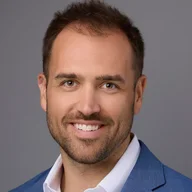 Hosted by
Nick Fischer
Hosted by
Nick Fischer