
Chiropractic Marketing: 55 Strategies & Ideas That Book New Patients (2026)
Chiropractic marketing that books new patients: where to start by budget, an effort vs. impact table for each channel, 55 strategies with how-tos, real results.
Chiropractic marketing is everything a practice does to get found by local people, earn their trust and turn them into booked new patients: a Google Business Profile and reviews, a website that converts, local SEO, Google and Facebook ads, text and email follow-up, and referrals. Start with the free basics, then add paid ads.
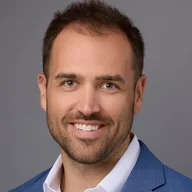

The practices that grow every year don’t have a secret channel. They do a handful of unglamorous things every single week: they show up on Google, they collect reviews, their website books visits, and somebody calls every lead back fast. The practices that stall usually have the same tools. They just run them in bursts, or they buy ads before the basics can catch the patients those ads send.
I’ve run marketing for chiropractors since 2013, and our team has worked with more than 200 practices. This guide is what we’d tell you on a strategy call: where to start for your situation, what each channel really costs in time and money, and 55 specific strategies, each with the how-to detail that usually gets left out. Every client result below is a dated snapshot from a published case study, with the channels we ran for that practice.
Where to Start: Chiropractic Marketing Strategy by Practice Stage
Don’t try all 55 ideas. Pick the three that fit where your practice is today and run them every week for 90 days. Here’s how I’d prioritize.
If you’re opening a new practice
You have no reviews, no rankings and no patient list, so the free channels can’t carry you yet. Your first job is to show up for people already searching.
- Website with online booking, live before you open. Patients check you out before they call.
- Google Business Profile verified before opening day, with every field complete.
- Google Ads (and Local Services Ads where available) so you appear at the top of search while your map ranking is still at zero.
- A review ask from patient one. Your first 20 reviews matter more than any later ones.
That’s the playbook behind several of our launches. Step Up Chiropractic in Honolulu booked 63 new patients in its first month as a solo practice (Website + Google Ads + Local SEO; case study, Jun 2026). The Ridge Chiropractic in Columbia, KY booked 108 new patients in month one against a goal of 60, and 400+ within four months (Website + Google Ads + Facebook Ads; case study, Jun 2026).
If you’re an established practice
You’re sitting on your cheapest new patients already: past patients who drifted away, current patients who’d refer if asked, and happy people who never left a review.
- Reactivate your list by email and text before you spend a dollar on ads.
- Systematize reviews with an automatic text after every visit.
- Fix website conversion (booking, click-to-call, the first-visit page) so you stop leaking the traffic you already get.
- Then add SEO and paid ads on top of a system that can catch the extra patients.
By budget
A reference point: chiropractors in Chiropractic Economics’ 2025 Salary and Expense Survey averaged $13,540 a year on advertising and marketing, about 3% of their $450,425 average collections. That works out to roughly $1,130 a month, which is about what one ad platform takes on its own.
| Your monthly budget | What I’d do |
|---|---|
| No ad budget | Google Business Profile, reviews, reactivation, referrals, and a website that converts. All of it costs team time, not ad spend. |
| One ad budget (about $1,000 to $1,500 a month) | Everything above, plus one paid channel. Google Ads if people in your area search for a chiropractor; Facebook and Instagram video ads if you’re willing to be on camera. |
| Two ad budgets | Google Ads for people searching now, Facebook video ads to build demand, with retargeting connecting the two. |
| Multiple offices or a fast growth push | All of the above, plus local SEO per location, a media day for fresh video, and TikTok if your patients skew younger. |
Those ad ranges are what our clients typically spend, paid directly to the platforms (see our pricing page for the full breakdown). They aren’t a rule; the right number depends on how many people search in your area and how many new patients your schedule can take.
Effort vs. Impact: The Main Chiropractic Marketing Channels Compared
Every channel costs either money or team time, and they pay back on very different clocks. This is how they stack up in the accounts we run. Dollar figures appear only where we have them; everything else is relative.
| Channel | Money | Team effort | First results | Impact once it’s working |
|---|---|---|---|---|
| Google Business Profile | Free | Low (setup, then a weekly post) | Weeks | High: it’s how you appear in the map results |
| Reviews | Free to low | Low once automated | Weeks | High: trust on every channel, plus map rankings |
| Website | One of your bigger costs | Medium (photos, video, copy review) | Weeks after launch | High: every other channel sends people here |
| Local SEO | Ongoing | Medium | Usually 3 to 6 months | Very high and compounding |
| Google Ads and LSA | Typically $1,000 to $1,500 a month in ad spend | Low for you, high for whoever manages it | Usually the first week | High while you pay; stops when you stop |
| Facebook and Instagram ads | Typically $1,000 to $1,500 a month in ad spend | Medium (you film the videos) | 4 to 8 weeks for retargeting to build | High, and it creates demand Google can’t |
| Email and text reactivation | Low | Low once automated | Days | Medium to high, depending on list size |
| Referrals | Free to low | Low (a habit, not a project) | Weeks | High-quality patients, slow to scale |
| Community events and talks | Low | High (your evenings and weekends) | Weeks | Medium, very local |
| Video and AI search | Low to medium | Medium | Months | Growing: feeds social, ads and AI answers at once |
The pattern: the free channels have the best return but take discipline, paid ads buy speed, and SEO is the slowest to start and the hardest for a competitor to take from you.
Prefer to watch? My full training on Google and AI search covers most of the channels in this table, from ads and Local Services Ads to the Business Profile, reviews, website structure and AI answers.
Jump to: Google Ads vs SEO (3:40) · Local Service Ads (6:21) · Google Business Profile (19:34) · Reviews (25:33) · Service and symptom pages (35:04) · Short answers AI can cite (43:02) · How long SEO takes (58:33)
Get Found on Google and AI Search (Ideas 1 to 10)
This is where people with intent already are. BrightLocal’s 2026 Consumer Search Behavior study found that 52% of consumers started their most recent local business search on Google Search and another 9% on Google Maps. Another 8% started with an AI tool, which is small today but the same work earns you both.
- Fill out every field of your Google Business Profile. Set “Chiropractor” as the primary category, then add secondary categories only where they’re true for your office. Add every service, your real hours (including holiday hours), booking link, and at least a few dozen real photos of the office, the team and you working. Most profiles we audit are half empty, and that’s free ground. (Our full Business Profile guide.)
- Post to your Business Profile every week. A short update, a tip or an office photo keeps the listing active. Put it on the calendar for the same day each week so it actually happens; here’s the simple weekly post we use.
- Give every service and condition its own page. One page each for sciatica, headaches, prenatal care, sports injuries and so on, written about how your office handles it. A single “Services” page with a bulleted list can only rank for one thing.
- Build location pages only where you can make them genuinely different. A page for a nearby town works when it says something real: directions, parking, the neighborhoods you see patients from, a local landmark. Twenty copies with the city name swapped look like doorway pages to Google and help no one.
- Write answer-first paragraphs. Under each heading, answer the question in two or three plain sentences before you explain. That’s the format AI tools like ChatGPT, Gemini and Google’s AI Overviews lift and cite. (How to get cited by AI.)
- Clean up your citations. Your name, address and phone number should be identical on Google, Apple Maps, Bing, Yelp, Healthgrades and Facebook. “Suite 200” on one and “#200” on another is fine; an old phone number or a previous address is not. Fix the old listings before building new ones.
- Target symptom and city searches. Patients search “sciatica chiropractor [city]” and “chiropractor near me,” not “spinal manipulative therapy.” Build your page titles around the words they use. (The keywords worth targeting.)
- Make your site fast on a phone. Google’s 2016 “Need for Mobile Speed” study found 53% of mobile visits were likely to be abandoned if a page took longer than 3 seconds to load. Compress images, drop sliders and heavy plugins, and test on your own phone over cellular, not office Wi-Fi.
- Add visible FAQs to key pages. Answer the questions your front desk hears every day: cost, insurance, what happens at the first visit. Keep each answer short and on the page itself, not hidden in a popup.
- Ask the AI tools about your town once a month. Type “best chiropractor in [your city]” into ChatGPT, Gemini and Google’s AI Mode and write down who gets named and why. If competitors show up and you don’t, the reason is usually fewer reviews, a thinner Business Profile or a website that never answers the question. (AEO and GEO for chiropractors goes deeper.)
Go deeper: Chiropractor SEO + AEO · SEO for chiropractors: the full guide · How long SEO takes
Proof: Castle Hills Chiropractic in San Antonio went from an average Google Maps rank of 18.6 to 2.4 across a 49-point scan between December 2024 and July 2025 (Website + Local SEO + Google Ads). Momentum Health Chiropractic in San Luis Obispo went from 7.4 to 1.2 between September 2025 and March 2026, ranking #1 at 46 of 49 points (Website + Local SEO).
Reviews and Reputation (Ideas 11 to 17)
Reviews do two jobs at once: they help you rank in the map results, and they decide whether the person reading them books. BrightLocal’s 2026 Local Consumer Review Survey found that 97% of consumers read reviews for local businesses, and 47% won’t use a business with fewer than 20 reviews.
- Send an automatic review request by text after every visit. Within a couple of hours of the appointment, while the visit is fresh, with a direct link to your Google review form. Automation is the whole trick: a request that depends on someone remembering stops the first busy week. That’s the core of our reputation management.
- Put a QR code at the front desk. A stand or flyer patients can scan while they check out turns “I’ll do it later” into 30 seconds on their phone. (Free QR flyer template, or our review stands.)
- Train your team on the ask. The best moment is when a patient says something positive at checkout. One line works: “That’s great to hear. Would you mind sharing that in a Google review? It helps other people find us.” Practice it at a team meeting so it doesn’t feel awkward.
- Reply to every review, without confirming they’re a patient. Thank people for their kind words without mentioning treatment, conditions or visits, and take any complaint offline. BrightLocal’s 2026 survey found 80% of consumers are likely to use a business that responds to all of its reviews. (HIPAA-safe reply examples.)
- Ask everyone, not just the happy ones. Google’s review policy bans selectively soliciting positive reviews, so skip the “were you satisfied?” filter that only sends 5-star patients to Google. A steady few new reviews a week also looks far more natural than a 30-review burst after a contest.
- Show reviews on your website next to the booking button. A visitor who’s deciding shouldn’t have to leave your site to find out what patients think. Pull in real Google reviews near every call to action.
- Turn your best reviews into social posts. A clean graphic with a patient’s words (first name or initials only) is the easiest content you’ll ever post, and it reuses proof you already earned.
Go deeper: Reputation management · How to get more patient reviews · Reinstating missing Google reviews
Proof: At Douglass Chiropractic in Destin, FL, we trained the staff to ask for reviews as part of the routine. The practice went from 47 Google reviews in late June 2026 to 57 by late September, holding a 4.9-star average (Website + Local SEO + Google Ads + Facebook Ads + Reputation Management).
Website and Conversion (Ideas 18 to 24)
Every other channel sends people to your website, so a site that doesn’t book wastes all of it. Fix conversion before you buy more traffic.
- Make the next step impossible to miss. “Book your first visit” above the fold on every page, and a sticky click-to-call bar on mobile. If a visitor has to scroll or hunt for your phone number, a share of them will hit the back button and call the next practice.
- Add online booking. Plenty of people decide at 10 p.m. on the couch. Let them pick a time instead of leaving a voicemail you return the next afternoon.
- Cover the phone after hours. Missed-call text-back and an AI receptionist answer questions and book appointments when your front desk is closed or on another line. Virtual CA is the one we build into ENGAGE.
- Replace stock photos with real ones. Your office, your team, you with patients (with permission). People are choosing a person to trust with their body, and a stock model in a white room tells them nothing. A media day gets you a year of photos and video in one visit.
- Spell out the first visit. What happens, how long it takes, what it costs, whether you take their insurance. Uncertainty is the most common reason a warm visitor doesn’t book.
- Keep forms short. Name, phone, email and maybe one question. Every extra field costs you leads; collect the rest at intake.
- Track calls, forms and bookings. Set up conversion tracking and call tracking so you know which page, ad or search sent each new patient. Without it you’re guessing which marketing works. (Not sure where your site stands? Grade it with our marketing checklist.)
I walk through the conversion side, from calls to action to the first-visit page, in my website training, starting at 12:14.
Go deeper: Chiropractic websites · Website design for chiropractors · The website checklist · What a chiropractic website costs
Proof: OPTMZ State Spine in Tracy, CA opened from scratch and booked 70+ new patients in its first month; its new site went from 0 to 600 ranking keywords by February 2026 (Website + Local SEO + CRM automation). Lexington Spinal Care went from 184 ranking keywords in March 2023 to 1,499 in July 2026 after a full rebuild (Website + Local SEO).
Paid Ads: Google, Local Services and Facebook (Ideas 25 to 31)
Ads buy speed while SEO and reviews compound. Google catches people already searching; Facebook and Instagram reach people who aren’t searching yet. Most of our clients spend $1,000 to $1,500 a month on each of Google Ads and Facebook ads, paid directly to Google or Meta and separate from any management fee.
- Run Google Search Ads on high-intent searches, with a long negative keyword list. Bid on “chiropractor near me,” “chiropractor [city]” and symptom searches. Then block the waste: massage, physical therapy, chiropractic school, jobs, salary, “free.” Check the search terms report every week for the first month. (Google Ads for chiropractors.)
- Add Local Services Ads. They sit above regular ads with a Google verification badge, and you pay per lead instead of per click. Google’s help page on LSA rankings says your reviews and how responsive you are affect where you show, so answer every LSA call live. Dispute leads that weren’t a fit. (The full LSA guide.)
- Send each ad to a page that matches it. A “sciatica chiropractor” ad should land on your sciatica page with a booking button, not your homepage. Matching the search, the ad and the page is what makes the click turn into a booked visit.
- Run Facebook and Instagram as an education funnel, not a coupon. Short videos of you explaining a common problem go to people within driving distance first. The offer comes later, once they know who you are. A discount shown to strangers mostly brings bargain hunters. (Facebook ads for chiropractors.)
- Retarget the people who watched. Build an audience of everyone who watched at least 15 seconds of your videos or visited your site, and show them more videos and then your offer. Plan on 4 to 8 weeks for that audience to grow big enough to produce steady leads. (The full four-stage system.)
- Describe your service, not the viewer. Meta’s advertising standards ban ads that assert or imply someone has a health condition. “Sciatica care in [town], new patients welcome” passes. “Is your sciatica keeping you up?” gets rejected.
- Follow up in seconds, not hours. We send a text, an email and a call about 30 seconds after someone submits a form, then follow up every 48 hours at least five more times. Slow follow-up is the most common reason an ad account looks like it has bad leads.
Go deeper: Google Ads · Facebook & Instagram ads · TikTok ads · SEO vs Google Ads · Facebook lead quality
Proof: Cape Fear Chiropractic in Wilmington, NC was flat at 15 to 20 new patients a month and reached 35 to 45 after we rebuilt the site and launched Google Ads (Website + Google Ads; case study, Jul 2026). Trident Health & Chiropractic in Spartanburg, SC was booking 20 to 30 new patients a month (Website + Facebook and Instagram ads; case study, Jul 2026). Across our Facebook ads clients, leads averaged $20 to $40 each over the 90 days to October 11, 2026.
Social Media and Video (Ideas 32 to 40)
Social rarely books a patient on its own. What it does is make you familiar, so when someone needs a chiropractor, you’re the one they already feel they know. Video does that faster than anything else, and the same clips feed your ads, your website and your Business Profile.
- Film short educational videos, about 90 seconds each. One condition you see every week, a couple of tips viewers can use today, and how your office approaches it. Teach, don’t sell. A library of 12 to 24 gives you enough to rotate.
- Share patient stories, with written permission. Get a signed authorization before you post anyone’s face, name or story, and keep it on file. A real patient explaining their experience in their own words beats anything you can say about yourself.
- Show the people. Staff introductions, a day at the front desk, why you became a chiropractor. People book people, and an office that feels familiar is less intimidating to walk into.
- Cut one long video into many short ones. A 10-minute Q&A becomes six Reels, a few Shorts, a blog post and a week of Business Profile posts. Record once, publish everywhere.
- Post on a schedule you can keep. Three posts a week, every week, beats a burst of daily posting that stops in a month. Consistency matters more than production polish.
- Batch it in a media day. One day with a photographer and videographer can produce months of content. Here’s the playbook and the media day checklist.
- Never run out of topics. Keep a running list of the questions patients ask on the table. Or start from our 200+ video topic ideas.
- Try TikTok if your patients skew younger. Short, plain-spoken education videos reach local audiences that may never see you on Facebook. (TikTok ads for chiropractors.)
- Caption every video. Plenty of people scroll with the sound off. Burned-in captions keep them watching, and they make your videos accessible.
Go deeper: Social media marketing for chiropractors · Better videos for Facebook ads · Omnipresent marketing
Proof: Spine Pro Chiropractic, with three offices in Wisconsin, was averaging 50 to 60 new patients a month, and Dr. Bernard credited a big part of that to social media and consistency (social + Facebook ads, website, reputation management, texting; case study, Jun 2026). Armeli Chiropractic went from 8 to 9 new patients a month to 20 to 25 after switching to us, with Dr. Armeli filming quick videos and our team editing them (Google Ads + Website + Video Content; case study, Jun 2026).
Email, Text and Reactivation (Ideas 41 to 46)
Your patient list is the warmest audience you’ll ever have, and most practices barely use it. These people already know where you are, what you do and what it feels like to be in your office.
- Run a reactivation campaign. Text and email patients you haven’t seen in 60, 90 or 180 days with a simple, personal note: “We haven’t seen you in a while. Here’s a link to book.” For an established practice with a big list, it’s often the fastest way to fill the schedule. (Email and text marketing.)
- Automate appointment reminders. A reminder 24 hours and again 2 hours before each visit, with a reply-to-confirm option, cuts no-shows without your front desk making a single call.
- Build a welcome sequence for new leads. Someone who filled out a form but didn’t book gets a short series: what to expect at the first visit, a quick video from you, and the booking link.
- Send a short monthly newsletter. One tip, one office update, one reason to come in. It keeps you in mind for the day their back goes out. (Nurturing patients with email.)
- Text like a person, and do it legally. Two-way texting from one business number lets patients reply and book in the channel they actually use. Collect opt-in, include opt-out on every message, and register your number for business texting (10DLC) so your messages get delivered. It’s all built into ENGAGE.
- Win back no-shows and cancellations automatically. A text within the hour (“We missed you today. Want to grab another time?”) recovers visits that would otherwise disappear.
Go deeper: Email & text marketing · ENGAGE CRM · Chiropractic answering service guide
Proof: We don’t have a case study that isolates reactivation on its own, so here’s the closest honest example: at Resilience Chiropractic in San Leandro, CA, ENGAGE texts and emails every new lead and sends appointment reminders alongside local SEO and Facebook ads. Its average Google Maps rank went from 16.4 in May 2022 to 3.0 in December 2024.
Referrals and Community (Ideas 47 to 53)
Referred patients arrive already trusting you, and they tend to refer too. The catch is that referrals rarely happen by accident; they happen when you make asking part of the routine.
- Ask at the right moment. When a patient tells you they’re doing well, that’s the opening: “If you know anyone who’d want to come in, we’d love to see them.” Put a reminder on the chart so the doctor and front desk both ask. (Building a referral system.)
- Give patients something to hand over. A referral card at checkout or a short link they can text a friend. The easier it is, the more often it happens.
- Partner with gyms, trainers and coaches. Offer to do a free posture or mobility talk for their members, and send them clients in return. Two-way relationships last; one-way requests don’t.
- Give workplace talks. A 20-minute lunch talk on desk posture at a local employer puts you in front of 20 people in one sitting. Bring a sign-up sheet and a clear next step.
- Show up at community events. Sponsor a youth team, staff a booth at the 5K, host a family day. Pick a few you can do well every year rather than a dozen once.
- Build relationships with other providers. Massage therapists, primary care doctors, dentists and OBs all see patients who could use you. With the patient’s consent, a short letter to their doctor after the first visit is a professional way to stay on their radar.
- Thank every referrer, and check the rules on rewards. A handwritten note always works. Gift cards and prizes are trickier: the federal Anti-Kickback Statute restricts rewards tied to Medicare or Medicaid care, and some states limit them even for cash patients, so check with your state board or a healthcare attorney first.
Go deeper: How to get more patient referrals · The 3-phase marketing plan
Proof: Full Power Chiropractic opened from scratch in Walpole, MA. Dr. Pallis reported a steady 15 to 25 new patients a month from Google, with those patients bringing referrals on top (Google Ads + Local SEO + Website; case study, Jun 2026).
New-Patient Offers (Ideas 54 and 55)
Your offer is the on-ramp. Every channel above gets someone interested; the offer gives them a clear, low-risk reason to book now instead of “someday.”
- Price your new patient special for the patient you want. A $20 to $50 first visit lowers the barrier and brings more people in; $80 to $150 filters for people more committed to care. In the Facebook accounts we run, a $47 to $65 special that includes the first adjustment usually strikes the best balance. Test one price for 60 days before you judge it. (Pricing it for volume vs. quality.)
- Spell out exactly what’s included, and make the next step tiny. “Consultation, exam, X-rays if needed and your first adjustment for $57” beats “New patient special!” every time. Add any fine print your state or payers require (many offices note the offer isn’t available to Medicare patients). Then make the button say “Book your first visit,” and deliver a first visit good enough that they stay, refer and review.
Go deeper: The new patient special guide · Facebook ad offer examples
Proof: Living Wellness Chiropractic in Columbia, MD booked 9 new patients in the first 3 weeks after its rebuilt website and coordinated Google and Facebook ads went live, up from 4 in the prior 11 weeks (Website + Local SEO + Google Ads + Facebook Ads; case study, Jul 2026).
How to Measure Your Chiropractic Marketing
Most practices measure the wrong thing. Clicks, likes and even leads don’t pay rent; new patients who show up do. Track these every month:
- New patients by source. Ask “How did you hear about us?” on the intake form, and back it up with call tracking and form tracking so you’re not relying on memory.
- Cost per new patient, by channel. Divide what you spent on a channel (ad spend plus management) by the new patients it produced. A channel with cheap leads that never book is your most expensive one.
- Lead-to-booked and show rates. If leads are coming in but the schedule isn’t filling, the problem is follow-up or the offer, not the ads.
- Map ranking across your area. Your rank from your own desk isn’t what a patient three miles away sees. A grid scan across your town shows the real picture.
Our marketing ROI calculator turns those numbers into a monthly return, and a free digital audit shows where your practice stands today on Google, reviews and your website.
Chiropractic Marketing FAQs
What is the best marketing strategy for a chiropractor? Win local search first: a complete Google Business Profile, a steady flow of new reviews and a website that turns visits into bookings. Then add Google Ads for people searching now and Facebook video ads to build demand. Follow up on every lead within minutes, or the rest leaks.
How much does chiropractic marketing cost? Chiropractors averaged $13,540 a year on advertising and marketing in Chiropractic Economics’ 2025 survey. Our clients typically spend $1,000 to $1,500 a month per ad platform, paid to Google or Meta. CHIROBASIX programs run from $150 a month (website only) to $2,300 a month (everything we do). See pricing.
How long does chiropractic marketing take to work? It depends on the channel. Google Ads usually bring clicks and calls in the first week. Facebook video ads need 4 to 8 weeks to build a warm audience. SEO usually shows noticeable ranking gains in 3 to 6 months (full timeline), and reviews and referrals compound for years.
How can a chiropractor get more new patients fast? Email and text past patients you haven’t seen in 90 days or more, turn on Google Ads for high-intent searches, and answer every lead within minutes. Those three can fill appointments within days. SEO, reviews and video keep working long after, but they take months.
Is it worth hiring a chiropractic marketing agency? It’s worth it when your time is better spent with patients and the agency reports booked new patients, not clicks. Look for chiropractic focus, named case studies, published pricing and clear ownership of your accounts. If you have a capable team member with time, do the free basics in-house first. (How to compare agencies.)
What’s the cheapest way to market a chiropractic practice? The free channels: complete and post weekly on your Google Business Profile, ask every happy patient for a review, reactivate past patients by email and text, and build a referral ask into your visits. None of them needs an ad budget, just a routine your team follows.
How should a new chiropractic practice start marketing? Launch a fast website with online booking, verify your Google Business Profile before opening day, and run Google Ads so you show up while your reviews and rankings are still at zero. Ask every early patient for a review. Add Facebook video ads once you can film.
What should a chiropractor track to know if marketing works? Track cost per new patient, not cost per click or lead. Count new patients by source each month, divide each channel’s spend by the patients it produced, and watch your show rate. A channel with cheap leads that never book is your most expensive one.
Get Started
Pick three ideas from this page: one that gets you found, one that builds trust, and one that makes booking easier. Run them every week for 90 days and measure new patients, not clicks. That alone puts you ahead of most practices in your town.
If you’d rather have the whole system built and run for you, that’s what we do every day. See real practices we’ve grown, check what our programs cost, or book a free consultation and we’ll map the three highest-impact moves for your market.
Keep reading

ChatGPT Business Hub for Chiropractors: How to Claim, Verify and Optimize Your Practice
OpenAI just gave every local business a profile inside ChatGPT, and your practice probably already has one you don't control. Here's how we claim, verify and optimize them for our chiropractic clients, with screenshots of every step.

22 Chiropractic Website Features That Turn Searches Into Booked Patients
The 22 features a chiropractic website needs to get found on Google and AI answers, earn trust and book new patients, with a self-check you can run on your own site today.
CHIROBASIX vs Perfect Patients, iMatrix, OnlineChiro, ChiroCandy and Inception
Seven chiropractic marketing agencies side by side on services, published pricing, contract terms, website ownership and Google reviews, every fact linked to the agency's own site and checked October 28, 2026.
Want this kind of strategy built for your practice?
Book a free consultation. We'll audit your current marketing and map out the omnipresence plan for your local market.
Book A Free Consultation