

TL;DR: Google Local Services Ads (LSAs) put your practice at the very top of Google — above the regular ads and the Map Pack — with a verification badge, and you pay per lead (a call or message), not per click. Chiropractors are eligible in most U.S. markets under Google’s health-and-wellness categories after a background, license, and insurance check. Unlike Google Ads for chiropractors, you don’t bid on keywords — Google ranks LSAs mainly by your review score, your responsiveness to leads, and your bid — which is why practices with strong reviews and fast follow-up win them. Below: how they work, who qualifies, what they cost, how to actually rank, and how to run them alongside Google Ads. (For the head-to-head decision, see Local Services Ads vs. Google Ads.)
If you want the single most trusted-looking spot on a Google search — a verified badge, above every other result, on a pay-only-when-a-patient-contacts-you model — Google Local Services Ads are it. Fewer chiropractors run them than run regular ads, largely because of the verification hoops, and that gap is exactly the opportunity. This guide covers how LSAs work for a chiropractic practice, whether you’re eligible, what they cost, and the part most articles skip: how Google actually decides who ranks.
What Are Google Local Services Ads for Chiropractors?
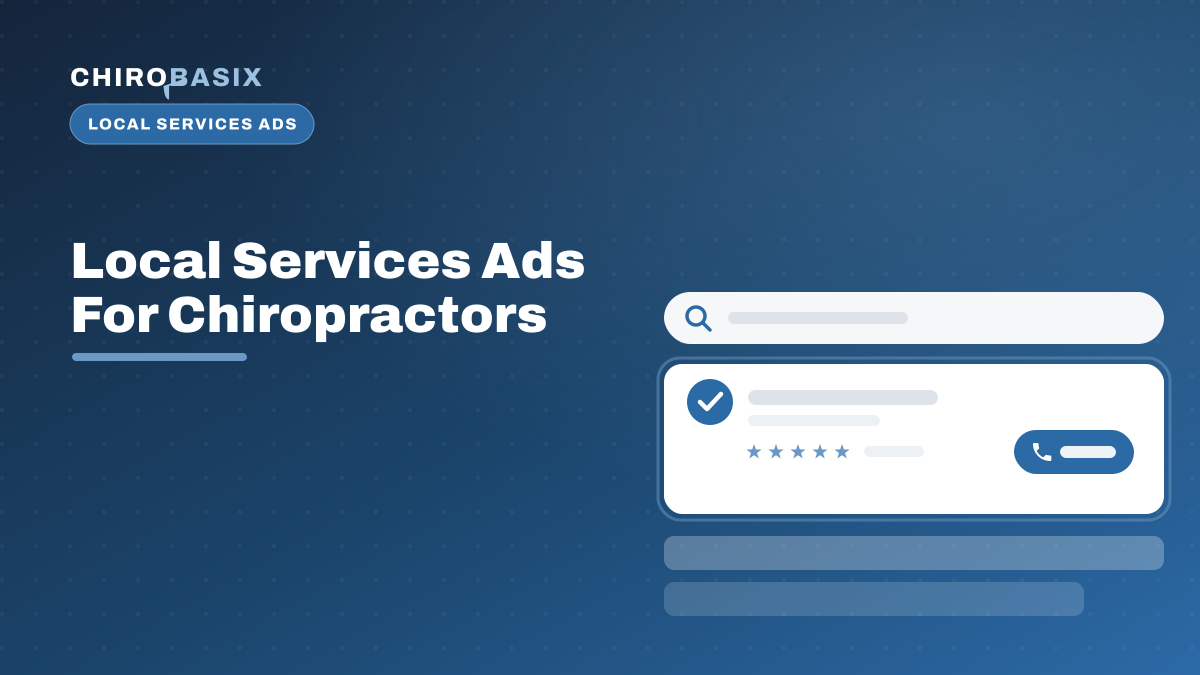
Google Local Services Ads are pay-per-lead ads that place your practice at the very top of Google’s search results — above the traditional Google Ads for chiropractors, above the Map Pack, and above the organic websites — with a verification badge that signals Google has vetted your business. You’re charged only when a searcher calls or messages you through the ad, not when they click.
That combination is what makes LSAs different from every other placement on the page. It’s the first thing a patient sees when they search “chiropractor near me,” it carries a trust signal nothing else on the page has, and your budget only moves when someone actually reaches out.
Are Chiropractors Eligible for Local Services Ads?
In most U.S. markets, yes. Chiropractors qualify under Google’s health-and-wellness service categories — though availability still varies by location and category, so the first step is always to confirm LSAs are live for chiropractic in your area.
To get approved and earn the badge, you complete Google’s verification, which for a chiropractic practice typically means:
- A background check (the owner, and often other licensed providers on staff)
- Your state chiropractic license
- Proof of general liability insurance
- A business license
- A base of Google reviews — Google favors well-reviewed practices, so a healthy review profile speeds approval and helps you rank once you’re live
One 2026 note worth knowing: Google has been consolidating its old badges — the green “Google Screened” check for professional services and the “Google Guaranteed” check for home services — into a single unified verification badge. The requirements (background, license, insurance) are unchanged; only the badge’s look and name are being standardized. Either way, your listing ends up with the verified checkmark that regular ads and Map listings simply don’t get.
How Local Services Ads Work: Pay-Per-Lead, Not Per-Click
This is the mechanic that changes the economics:
- Google Ads: you pay every time someone clicks your ad — even the mis-clicks and the tire-kickers (cost-per-click).
- Local Services Ads: you pay only when someone contacts you — a phone call or message — through the ad (cost-per-lead).
Better still, not every lead is billable. If a call comes in for something you don’t offer — massage, physical therapy, a wrong number — you can dispute the lead and get that charge refunded. In practice that means your spend maps much more tightly to real new-patient conversations, which is why LSAs so often post a lower effective cost per booked patient than a standard search campaign.
The trade-off: you give up the fine-grained control of Google Ads. You can’t write custom ad copy, target specific keywords, or send traffic to a dedicated landing page. LSAs show for Google’s set of chiropractor-related searches, on Google’s terms — which is why most practices run them alongside regular search ads rather than instead of them (more on that below).
How Google Ranks Local Services Ads
Here’s the part that separates practices that print new patients from LSAs and practices that quietly overpay: LSA ranking is not an auction you win by bidding highest. Google ranks Local Services Ads on a blend of signals, and the three that matter most are:
| Ranking factor | What it means | How you win it |
|---|---|---|
| ⭐ Review score & volume | Google now counts your Google Business Profile rating and review count toward LSA rank — there’s no separate LSA review system. Well-reviewed practices routinely outrank higher bidders. | A steady stream of fresh 5★ reviews — the core of reputation management. Aim for a 4.5★+ average and a review count that beats your local competitors. |
| ⚡ Responsiveness | Google watches how fast and how reliably you answer leads. Slow or missed responses tell the algorithm you’re not ready for more — and your placement drops. | Answer every call and message fast. This is where an AI front desk that returns missed calls in seconds and never lets a lead sit is a direct ranking advantage, not just a nicety. |
| 💰 Bid & budget | Your weekly budget and bid still matter — but they’re the least differentiating factor, because reviews and responsiveness can beat a bigger budget. | Set a budget that matches your capacity, then let reviews and speed do the heavy lifting rather than trying to buy your way to the top. |
Proximity to the searcher and a complete, active Google Business Profile round out the picture — which is why LSAs and chiropractic SEO reinforce each other. The takeaway: the two levers you most control — reviews and response speed — are the ones Google rewards most. Get those right and you can outrank practices spending more than you.
What Do Local Services Ads Cost for a Chiropractor?
You pay a set amount per qualified lead, and that amount varies by market and how many other practices are competing — a call is worth more in a dense metro than a small town. You cap your exposure with a weekly budget, so you never spend beyond what you set, and the dispute-and-refund system above keeps you from paying for junk leads.
Because the model is pay-per-lead, the honest way to judge LSA cost isn’t the price of a single lead — it’s your cost per booked patient after refunds and no-shows. For most chiropractic practices, a new patient’s first care plan is worth several hundred dollars, so even a handful of booked patients a month makes the channel pay for itself. (Want the full picture on ad budgets across channels? We break down realistic spend in the 3-phase marketing plan.)
How to Set Up Google Local Services Ads: Step by Step
- Confirm eligibility for your area. Check that Local Services Ads are available for chiropractic in your city — coverage varies by market.
- Complete Google’s verification. Submit your background check, state chiropractic license, liability insurance, and business license. This is the slow step — plan for it to take a couple of weeks.
- Set your service area and categories. Define the geography you actually serve and the chiropractic service categories you want to show for.
- Connect and strengthen your Google Business Profile. Since your GBP reviews feed your LSA rank, make sure your profile is complete, accurate, and steadily earning fresh reviews before you scale spend.
- Set a weekly budget. Start conservative, matched to how many new patients you can realistically handle, then scale as you see qualified leads convert.
- Wire up fast lead response. Turn on notifications, and make sure every call and message gets answered quickly — ideally with an AI front desk backstopping your team so no lead (and no ranking signal) slips at night or over lunch.
- Review and dispute leads weekly. Flag any non-chiropractic or spam leads for a refund, and watch which searches drive your best calls.
Local Services Ads vs. Google Ads: You Want Both
LSAs and Google Ads aren’t competitors — they cover different parts of the page and the funnel:
- Local Services Ads own the very top with a verified, pay-per-lead placement that captures the most ready-to-book callers.
- Google Ads for chiropractors target a far wider range of keywords, let you write your own offers, and send clicks to conversion-built landing pages — reaching patients LSAs never show for.
Run both and you cover the entire results page: the verified badge at the top for high-intent callers, and keyword-targeted search ads capturing everyone else. For the full head-to-head — including when to lead with which — see Local Services Ads vs. Google Ads for chiropractors.
Google Local Services Ads for Chiropractors FAQs
What are Google Local Services Ads for chiropractors? Google Local Services Ads (LSAs) are pay-per-lead ads that appear at the very top of Google Search — above the regular Google Ads and the Map Pack — carrying a Google verification badge. Chiropractors who pass a background, license, and insurance check earn the badge, and pay per qualified lead (a call or message) instead of per click.
Are chiropractors eligible for Google Local Services Ads? In most U.S. markets, yes. Chiropractors qualify under Google’s health-and-wellness service categories, though availability varies by location, so it’s worth confirming for your area. Getting approved requires a background check, your state chiropractic license, proof of general liability insurance, and a business license — after which your listing shows Google’s verification badge.
How much do Local Services Ads cost for a chiropractic practice? You pay per lead, not per click — a set amount for each qualified call or message, which varies by market and competition. You control spend with a weekly budget, and you can dispute leads that aren’t a real fit (for example, someone calling for massage or physical therapy) to get that charge refunded, which keeps your cost per booked patient efficient.
How do you rank higher in Google Local Services Ads? Google ranks LSAs mainly on three signals: your review score, how responsive you are to leads, and your bid or budget. The most controllable levers are reviews (Google now counts your Google Business Profile rating and volume) and responsiveness — answering new leads fast. Practices with strong reviews and quick follow-up routinely outrank competitors who simply bid more.
Should chiropractors run Local Services Ads and Google Ads together? Yes — they cover different ground. LSAs capture ready-to-book callers at the very top of the page on a pay-per-lead model, while Google Ads let you target a far wider range of keywords and send clicks to conversion-built landing pages. Running both gives your practice maximum coverage across the entire Google results page.
Want the verified badge at the top of Google — and the reviews and response speed to actually rank for it? Book a free consultation and we’ll map out your Local Services Ads, get you verified, and wire up the reputation and lead-response engine that keeps you on top.
Keep reading
AEO & GEO for Chiropractors: How to Get Your Practice Recommended by AI
AEO and GEO are two names for one goal — getting your practice cited and recommended inside AI answers. Here's the practice-focused hub guide, built on your SEO foundation.
GEO vs SEO for Chiropractors: What's the Difference?
SEO gets your practice ranked. GEO gets it cited inside the AI answer. Here's how they differ, where they overlap, and why chiropractors need both in 2026.

How to Get Your Chiropractic Practice Cited by ChatGPT & AI Search
AEO and GEO are two names for one job: getting your practice cited inside AI-generated answers. Here's the practical how-to for chiropractors — the six signals that earn AI citations, step by step.
Want this kind of strategy built for your practice?
Book a free consultation. We'll audit your current marketing and map out the omnipresence plan for your local market.
Book A Free Consultation