

Neither chiropractor SEO nor Google Ads wins outright — they win on different timelines. Google Ads buys you new-patient calls this week but stops the moment you stop paying. SEO compounds for months and keeps producing after the work is done. For most practices, the smart move in 2026 is running both.
I get this question on almost every strategy call: “Should I do SEO or Google Ads?” It’s the wrong question. The right one is “What do I need first, and what am I building toward?” Both channels put your practice in front of people actively searching for a chiropractor — the difference is how you get there, what it costs, and how long it lasts. Let me break it down straight.
How the two channels actually work
Google Ads puts your practice at the top of the results page instantly — you pay each time someone clicks. Turn it on, the phone rings. Turn it off, it stops.
Chiropractor SEO earns your spot in the organic listings and the Google map pack over time by making your site the most relevant, trusted answer for searches like “chiropractor near me.” You don’t pay per click, and the rankings don’t vanish when you pause.
One rents attention. The other builds an asset you own. That single difference drives everything below.
Chiropractor SEO vs Google Ads: the head-to-head
| Dimension | Chiropractor SEO | Google Ads |
|---|---|---|
| Cost model | Fixed monthly investment in content, on-page, GBP, links | Pay-per-click; you bid against other clinics for every visit |
| Speed to results | Slow — traction in 3–6 months, momentum after | Fast — leads within days of launch |
| Longevity | Compounds; rankings persist after work slows | Stops the day the budget stops |
| Trust | Organic and map-pack results read as earned credibility | Labeled “Sponsored”; some patients skip ads |
| Cost per patient over time | Drops as rankings mature | Flat or rises as competition bids up clicks |
| Best fit | Long-game practices dominating a metro | New clinics, new locations, promos, chairs to fill |
Where Google Ads wins
Speed. Nothing else touches paid search when you need patients this week.
If you just opened, you’re launching a second location, or you’ve got open chairs and a new-patient special to promote, Ads fills the schedule while your organic presence is still warming up. You control the geography, the message, and the budget down to the dollar.
The catch: it’s a faucet. The day you stop paying, the flow stops — and your cost per click tends to climb as more clinics in your area bid on the same keywords. You’re also renting; nothing you spend today lowers what you pay tomorrow. Done well, though, Google Ads for chiropractors is the fastest way to put patients on the table.
Where chiropractor SEO wins
Compounding. SEO is slow to start and hard to stop.
The work you do in month two keeps paying in month twelve. Rankings you earn hold their position, the map pack sends you calls you never pay per click for, and your cost per patient drops as your authority grows. It’s also the trust play — patients click organic and map-pack results more readily than anything labeled “Sponsored,” and showing up for a symptom search positions you as the local authority, not just the highest bidder.
The results compound in ways paid can’t. On our own client work, Optimal Chiropractic went from 60 to 1,956 ranking keywords — about 33× — with roughly 15× the organic traffic. Castle Hills Chiropractic in San Antonio moved its average map rank from 18.6 to 2.4. Alter Chiropractic grew its keyword footprint roughly 11×, and Life Aligned Chiropractic went from zero to 575 ranking keywords. That’s the kind of position you can’t switch off.
If you want the full playbook, our ultimate SEO guide for chiropractic practices walks through every lever. And because AI answer engines now sit alongside Google, it’s worth understanding how SEO and AEO differ too.
Why most practices should run both
Here’s the honest answer most agencies won’t give you because it’s less tidy to sell: you shouldn’t pick.
Run Ads for immediate cash flow while SEO builds. As your organic rankings and map presence mature over the next 6–12 months, they carry more of the load — and you can dial paid spend up or down around promotions and slow seasons instead of depending on it. Ads become a lever, not a lifeline.
The two also feed each other. Ads data shows you exactly which keywords convert, which tells your SEO team what to prioritize. And a practice that shows up in both the paid slot and the organic map pack owns more of the page — two shots at getting the click instead of one.
How to decide what to fund first
Simple rules of thumb:
- Empty schedule, need patients now? Start with Ads, layer SEO underneath.
- Steady flow, want to stop renting patients? Weight toward SEO and treat Ads as a dial.
- New or hyper-competitive market? Run both hard — Ads to compete today, SEO to win the long game.
- Tight budget, can only pick one? If you can survive the ramp, SEO gives you a compounding asset. If you can’t wait, Ads keeps the lights on.
Two more spokes worth reading before you commit a budget: how much chiropractor SEO costs and how long chiropractor SEO takes to work.
Want us to map the right mix for your practice and market? Our chiropractor SEO and AEO service starts with a plan built around your goals — see the results across our case studies or book a call.
FAQs
Is SEO or Google Ads better for a chiropractor?
Neither is universally better. Google Ads wins on speed and fills chairs immediately, while chiropractor SEO wins on long-term cost and compounding rankings. Most practices get the best return by running both together and shifting the balance over time.
How fast does each channel bring in new patients?
Google Ads can produce new-patient calls within days of launch. Chiropractor SEO usually takes three to six months to gain real traction, then keeps compounding. That’s why many practices run Ads first and let SEO mature underneath it.
Which is cheaper per new patient?
Over time, SEO usually wins. Google Ads costs stay flat or rise as more clinics bid on the same keywords, while SEO’s cost per patient drops as your rankings and map presence mature and keep producing without per-click fees.
Do patients trust organic results more than ads?
Generally, yes. Many patients skip listings labeled “Sponsored” and click organic or map-pack results they read as earned. Ranking for a symptom or “chiropractor near me” search positions you as the local authority rather than the highest bidder.
Can I run Google Ads and SEO at the same time?
Yes, and most practices should. Ads deliver immediate flow while SEO compounds, and the two feed each other — conversion data from Ads shows your SEO team which keywords to prioritize, and appearing in both spots wins more of the page.
Keep reading
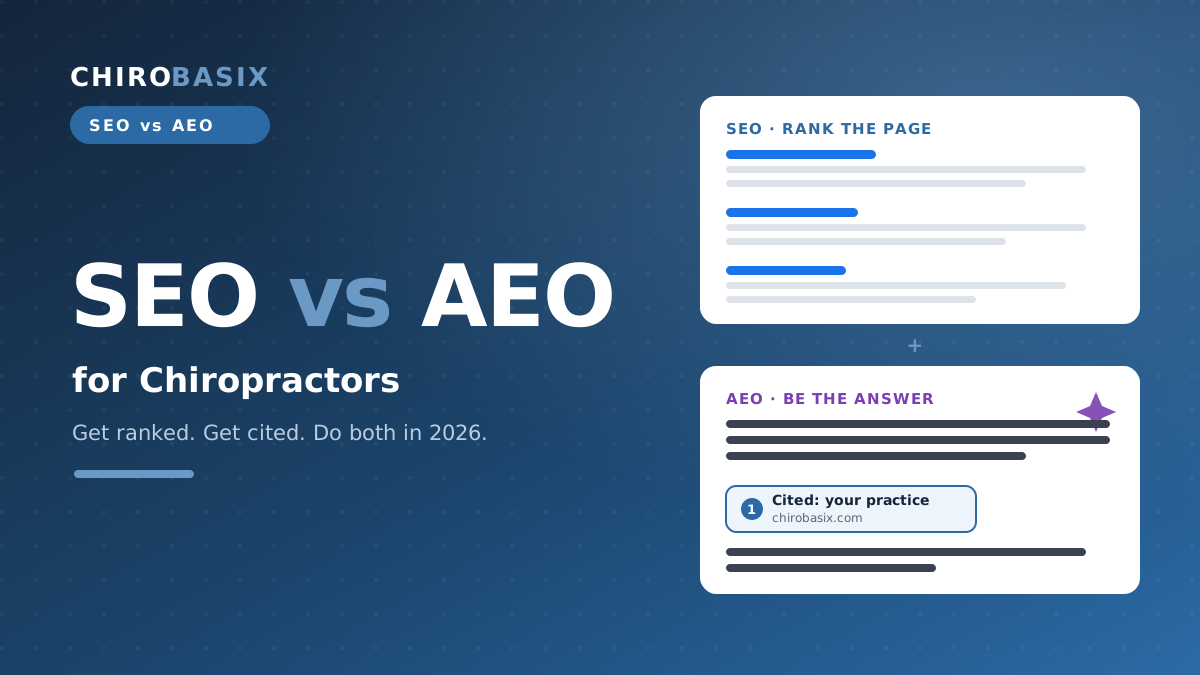
SEO vs AEO for Chiropractors: Why Your Practice Needs Both in 2026
SEO gets your pages ranked. AEO gets your practice cited as the answer. Here's the difference — and the do-both playbook for chiropractors in 2026.
How Long Does Chiropractor SEO Take to Work? (2026 Timeline)
Noticeable gains in 3–6 months, big compounding from month 6+. Here's the honest, phase-by-phase timeline for chiropractor SEO — with real, dated client results.
How Much Does Chiropractor SEO Cost? (2026 Pricing Guide)
Three agencies, three different quotes — because SEO isn't one product. Here's what chiropractor SEO actually costs in 2026, the common pricing models, and how to think about ROI before you sign anything.
Want this kind of strategy built for your practice?
Book a free consultation. We'll audit your current marketing and map out the omnipresence plan for your local market.
Book A Free Consultation